Eggplant Parmesan

After my divorce, I went a few years without making eggplant parmesan, something that I enjoy periodically though not frequently. The reason for the dishes’ absence, of course, was the new girlfriend didn’t eat eggplant. That’s how it is for people. We like some things, others not so much, while some foods there is a red line, or hard no.

The hardest part about making eggplant is removing the skin. I use a potato peeler. Once that is done, slice the eggplant(s) in half-inch rounds, and lay them on sheets of paper towels. Salt both sides generously and then ignore the eggplant slices for about 30 minutes. This removes some of the water from the vegetable.

Fry the eggplant in olive oil in a non-stick skillet or pan in batches at a time, 3-4 minutes per side. You will need to add olive oil, most likely, as you turn the slices over and cook the second side. And more olive oil for subsequent batches until all the eggplant is fried. 

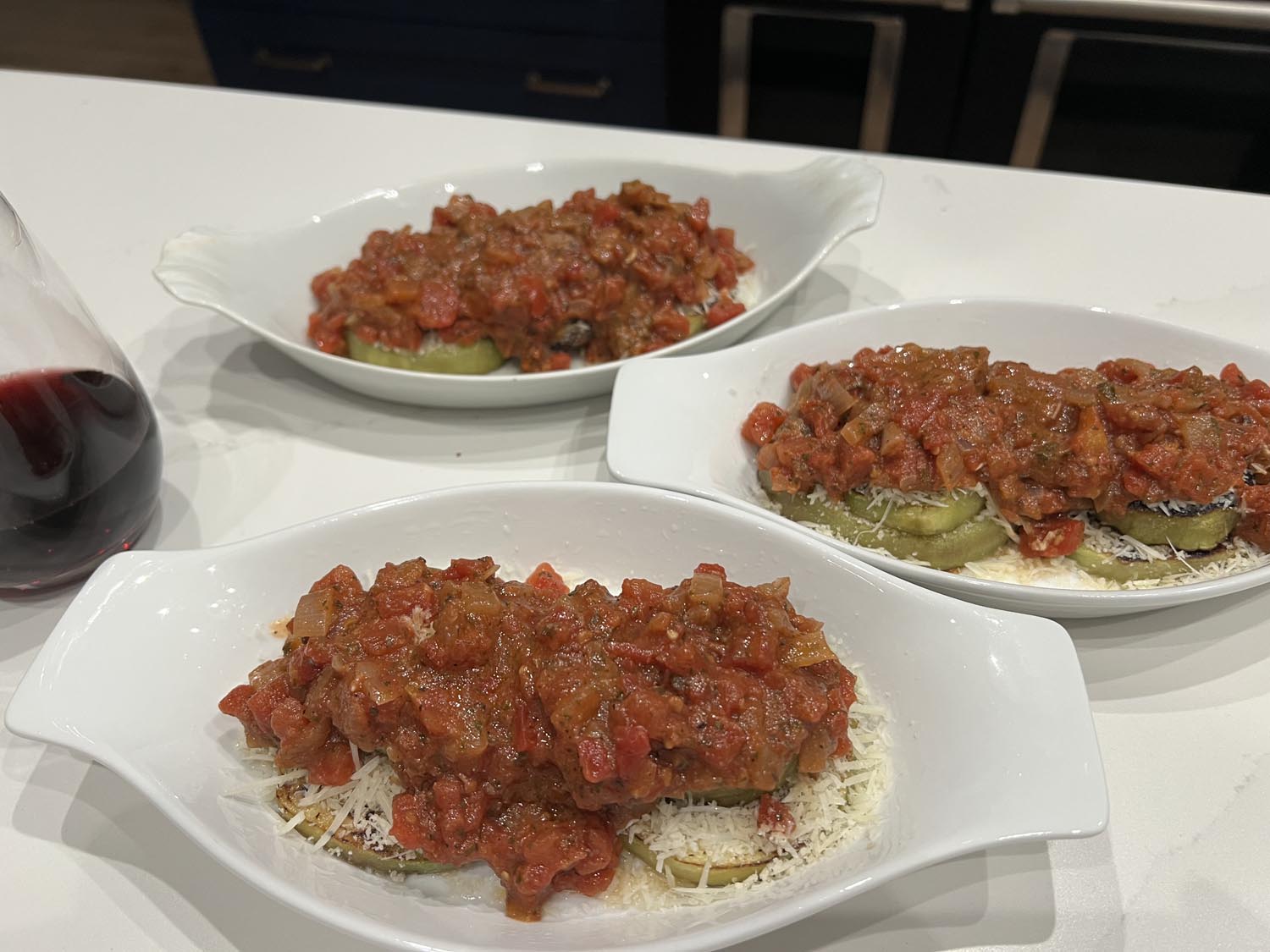
In a greased baking dish – or baking dishes, lay down the eggplant slices, then top with a bread crumb, panko combination. This will give the dish some support for the sauces to follow. 

Then top the eggplant with parmesan cheese. And because I like the creamy texture of mozzarella, I will add some shredded mozzarella to the top. 
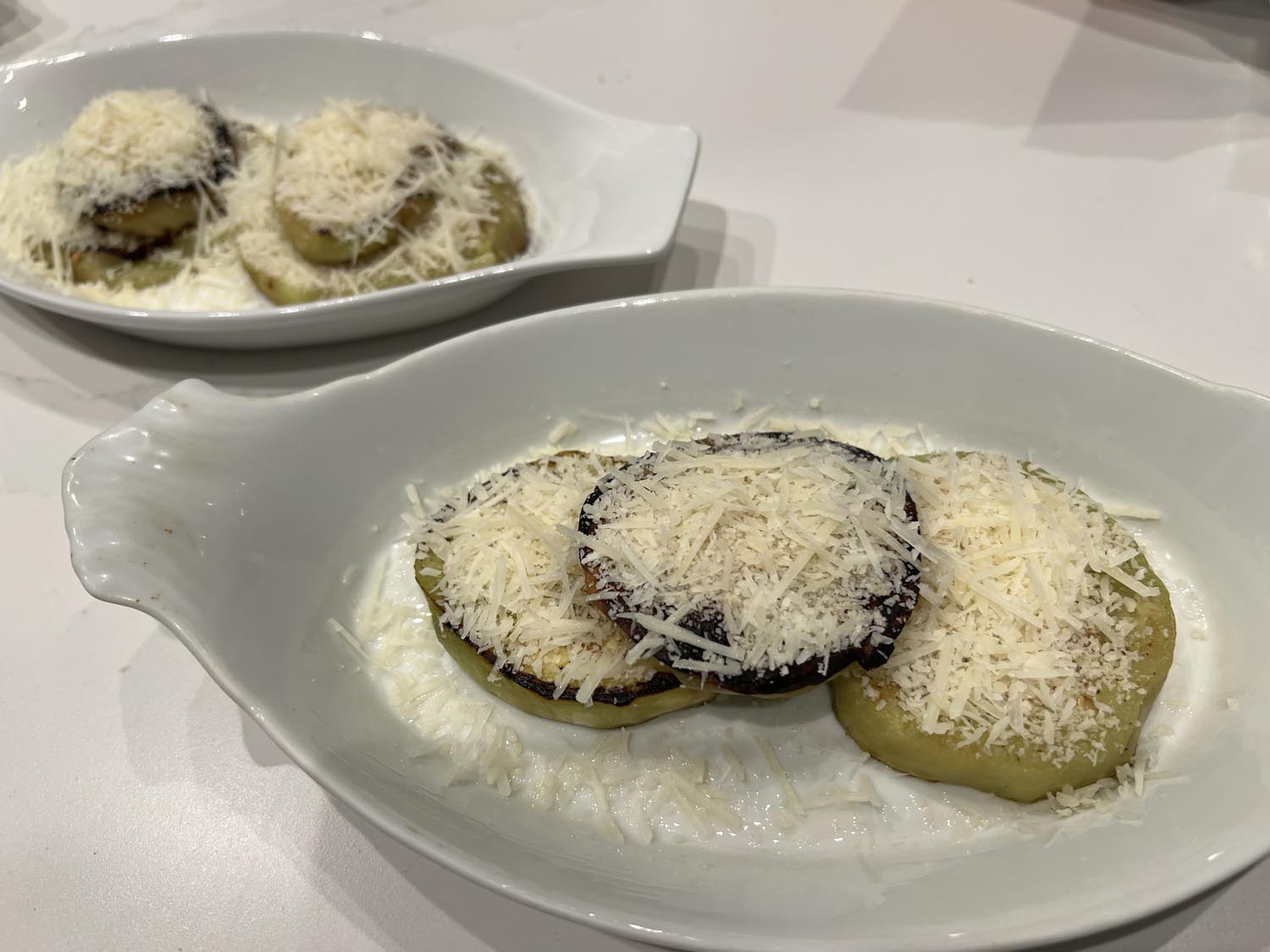
Once that is set up, top the eggplant with a few healthy spoons of homemade tomato gravy (aka sauce to most Americans).

The third and final step before baking the dish(es) is to make a bechamel sauce using butter (roux), flour, a little grated parmesan cheese and half-and-half, until the mixture is creamy and begins to thicken, but not too thick.

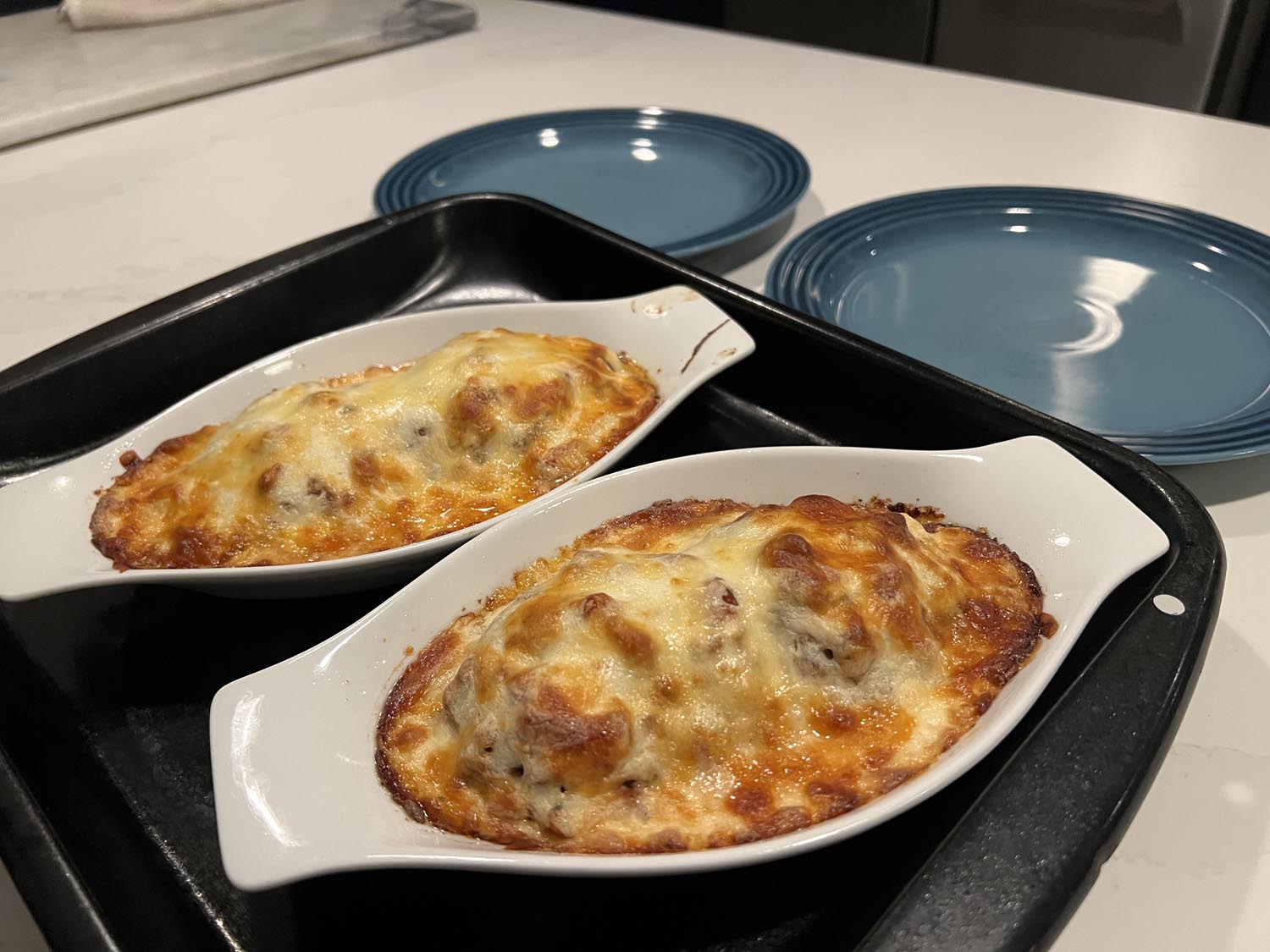
Pour and scrape the bechamel sauce evenly on top of the eggplant slices with piles of tomato sauce.

 Bake at 375 for 20 minutes.
Italian Gravy

About an hour into making my latest batch of Italian gravy, I could not help by think: Mom is smiling right now.” My house was smelling so good!

I needed to make a batch of gravy because I am planning my next dinner party – a Table for 6 (one per month – non-travel months, in 2026) and pizza is on the menu to go along with Tuscan-grilled New York Strip Steaks and roasted fennel with lemon, butter and parmesan cheese, and am out of pizza sauce.

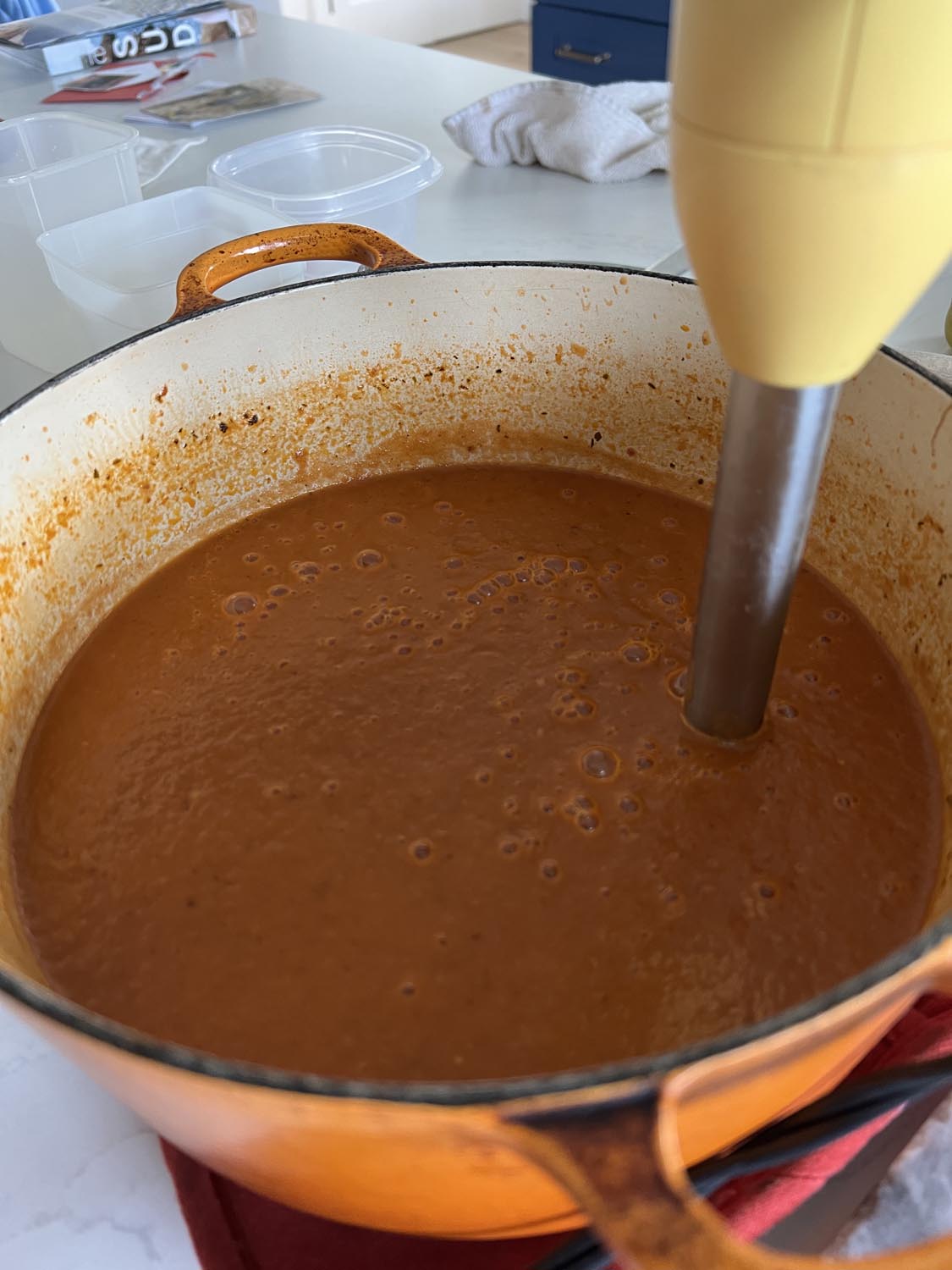
My pizza sauce is simply Italian red gravy, with an inversion blender inserted into the pot to make the gravy into a smooth sauce. 

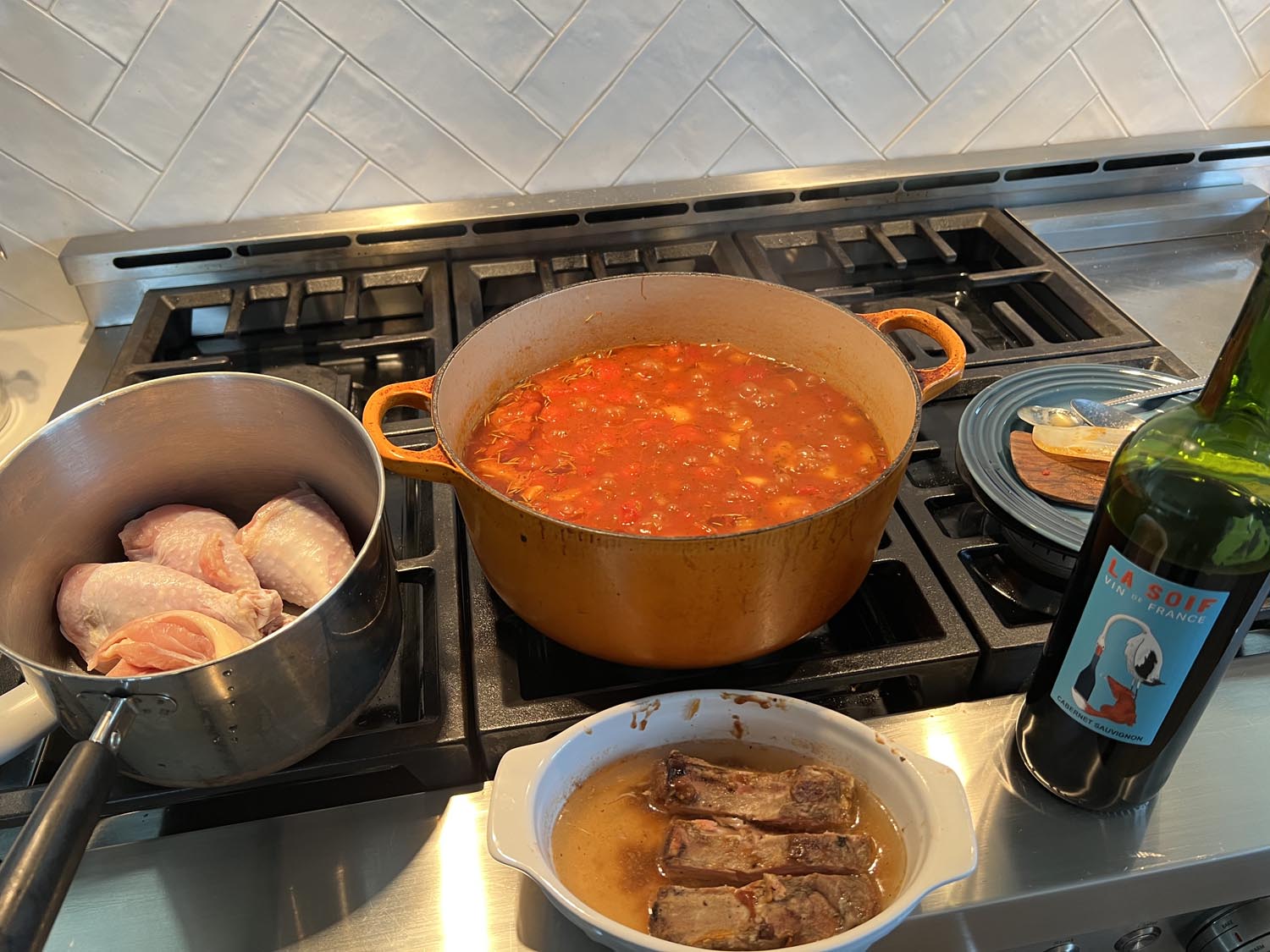
The photo shows the gravy when all the vegetables, tomatoes, chicken stockand wine has been added, and about to receive the meats – in this case chicken and a few pork rib bones. The upside to this: I now have a nice serving of gravy in the freezer for a future pasta dish, several containers of pizza sauce for future pizzas, including the two that I will make for Valentines’ Day and the aforementioned dinner for 6, and this Sunday I will have a fine chicken cacciatore with pasta dish to share with a friend. 

The meats, meanwhile, give both the gravy and sauce a flavor profile sought after by home cooks throughout Southern Italy. 

In a 4- or 5-quart pot

  • Lay down a generous amount of premium olive oil
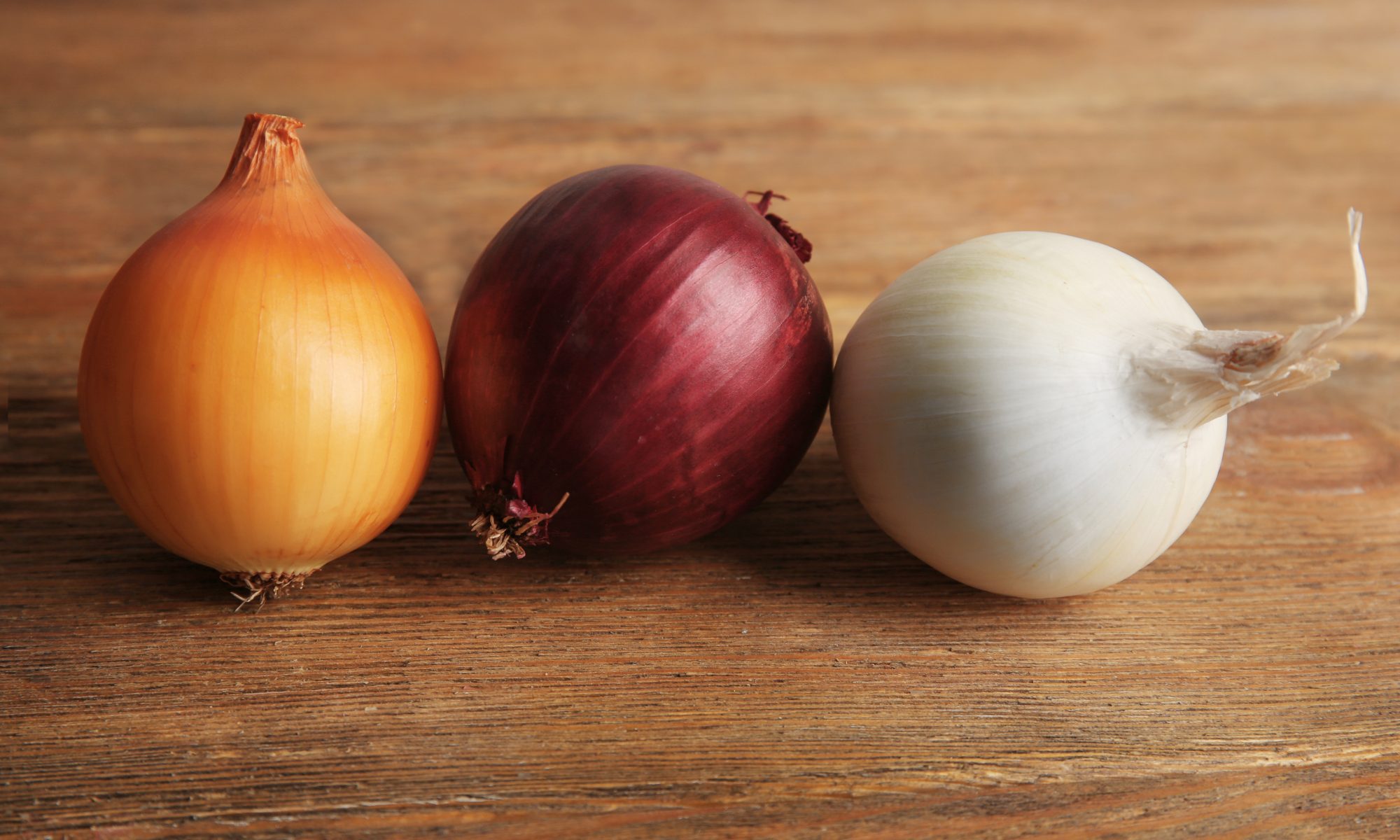
  • A Large, yellow onion, chopped coarsely
  • 2 sticks celery
  • 12 or so garlic cloves, coarsely chopped
  • 1 large can diced tomatoes (16 or more ounces)
  • 1 average can (15 oz) tomato sauce
  • 2 heaping tablespoons tomato paste
  • A full teaspoon each dried basil, parsley plus black pepper, a little rosemary, Italian Seasoning if you have it.
  • 2 full Tbls good salt
  • 1 teaspoon sugar
  • 1.5 cups red wine (for the gravy, but you can drink what’s left in the bottle!)
  • 1 cup chicken stock
  • 1 full Tbls duck fat, or 1.5 inches of a butter stick if you don’t have the duck fat
  • 3-4 previously cooked, leftover pork (baby back) ribs
  • 3-4 chicken legs

Cooking

Sauté the onions, garlic and celery on a medium heat until soft – don’t char or brown the onions

Add the tomato paste to the middle/bottom of the vegetables and top that with the sugar. Stir to blend the paste with the vegetables. 

Then integrate the cans of tomatoes, and all the spices. Stir well and let cook for about 5 minutes before adding the wine and chicken stock. 

Once that is all blended together add the duck fat or butter, and then the meats. 

Cover and cook on very slow heat. 

After about 40 minutes remove the chicken and ribs. Set these aside to have as a pasta dish (chicken cacciatore) with some of the gravy after it is finished cooking. Refrigerate until you want this meal. 

Let the gravy cook, lid on, slowly, another 2 hours or so. Remove from stovetop and let cook with the lid off. 

Once cool, ladle out about half of the mixture to use with the vegetables still mostly intact as the basis for pasta dishes, and use an inversion blender to smooth out the rest of it to use as pizza sauce.